
Gutter Cleaning Funnels: How Canadian Companies Fill Their Spring and Fall Schedules With GoHighLevel
Gutter cleaning in Canada is a business of two rushes. The phone barely rings in February, then the snow melts, the spring rain arrives, and every homeowner in the neighbourhood suddenly discovers their gutters are clogged, overflowing, or pulling away from the fascia. The same thing happens again in the fall, when leaves drop and everyone wants their gutters cleared before the first freeze.
The problem is not demand. The problem is that the demand arrives all at once, in a window of a few weeks — and the companies that win it are the ones whose schedules were already half full before the rush started. This guide shows how a simple booking funnel and a handful of automations in GoHighLevel help Canadian gutter cleaning companies fill their spring and fall schedules early, instead of scrambling when the phone starts ringing.
Why Seasonal Demand Punishes Disorganised Companies
Winter is hard on Canadian gutters. Snow and ice sit in the troughs for months, freeze-thaw cycles work debris into corners, and melting snowpack pushes water against ice-clogged downspouts. By the time spring rain arrives, a gutter that looked fine in November can overflow at every joint. Homeowners don't notice until water is pouring over the edge — and then they all call in the same two weeks.
That pattern creates three specific problems:
A flood of enquiries in a short window. Calls, form fills, and Facebook messages spike. Any lead that isn't answered quickly books with the competitor who replied first.
A long, quiet off-season. Customers you cleaned for last spring disappear for twelve months unless something brings them back.
Weather chaos. Rain and late snow shuffle jobs constantly. Every reschedule handled by phone tag costs office time and sometimes the job itself.
A funnel-and-automation setup doesn't change the weather. It changes how much of that seasonal demand you capture, and how much of last season's customer list comes back on its own.
Step 1: Build One Booking Funnel for the Season
You don't need a complicated website. You need one focused page whose only job is to turn a homeowner into a booked job. A seasonal gutter cleaning funnel in GoHighLevel looks like this:
Landing page built around the season: "Spring Gutter Cleaning — Book Before the Rush" with clear pricing guidance (per-storey or per-linear-foot, however you quote), a short list of what's included, and one obvious Book Now button.
A short form that captures name, phone, email, address, and home size. The address matters — it lets you route jobs by neighbourhood and quote travel-heavy jobs differently.
A calendar step so the customer picks a day immediately instead of starting a phone conversation that may never finish.
A thank-you page that confirms the booking and tells them what happens next ("We'll text you a reminder the day before").
Run a separate version for spring and fall — the same funnel, with the headline, dates, and any early-booking incentive swapped. Early-bird pricing for bookings made three or four weeks before the rush is a simple way to pull demand forward into weeks where your crews actually have room.
Step 2: Answer Every Lead in Under a Minute
During the rush, the company that replies first usually gets the job. No crew owner can personally text back every enquiry while they're on a ladder, which is exactly what automation is for. In GoHighLevel, the moment a form is submitted or a call is missed, you can trigger:
An instant SMS: "Hi [Name], thanks for contacting us about gutter cleaning — here's a link to grab your spot: [booking link]"
A follow-up email with the same link and a short explanation of the service.
A second and third nudge over the next 48 hours for people who clicked but didn't book.
This isn't pressure selling. It's simply not letting a homeowner who already raised their hand drift away because nobody replied until evening. If you'd rather have a specialist set this up, this kind of speed-to-lead system is a standard part of what a GoHighLevel expert builds for service businesses.
Step 3: Let Last Season's Customers Book First
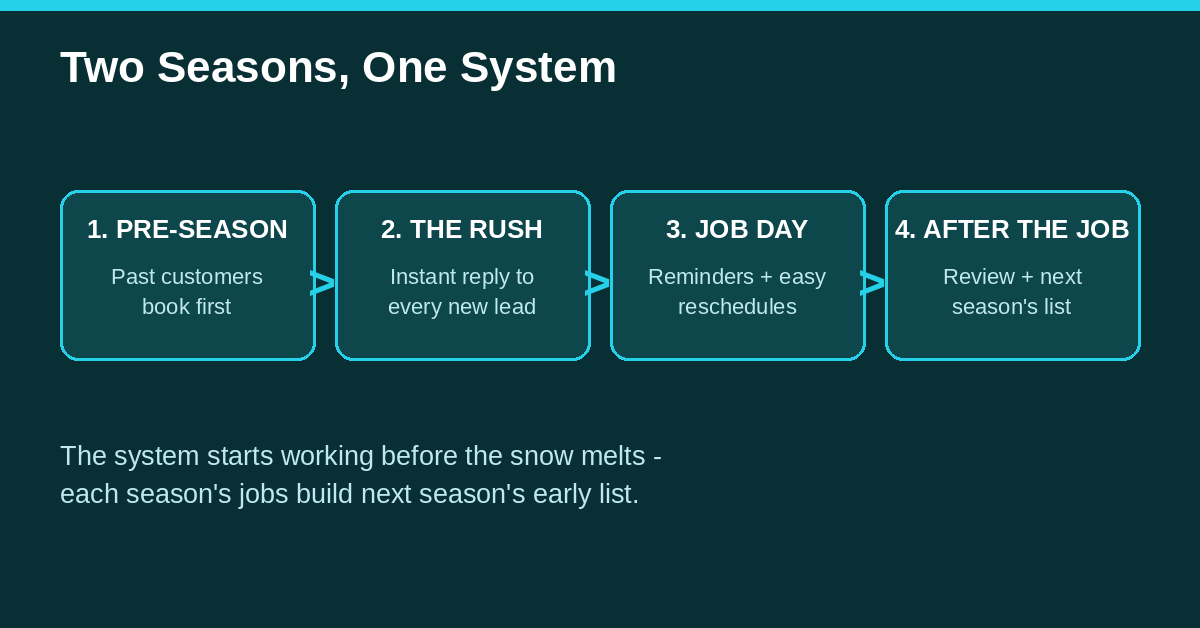
Your cheapest spring bookings are sitting in last year's job list. Every customer whose gutters you cleaned last spring or fall already trusts you, already knows your price range, and will need the same service again — gutters clog on a schedule, not by surprise.
With your contacts stored in GoHighLevel, you can segment them by last service date and send a pre-season campaign before you spend anything on ads:
Four weeks before the rush: "We're opening our spring schedule to past customers first. Book by [date] and keep last year's price."
Two weeks out: a reminder to anyone who opened but didn't book.
Once public booking opens: the campaign stops — the early window was the reward.
This one campaign, sent twice a year, can fill the front of your schedule with your easiest, highest-trust jobs. It also smooths the rush: work booked early can be spread across more days instead of crushed into the two busiest weeks.
Step 4: Automate the Reminders Around Every Job
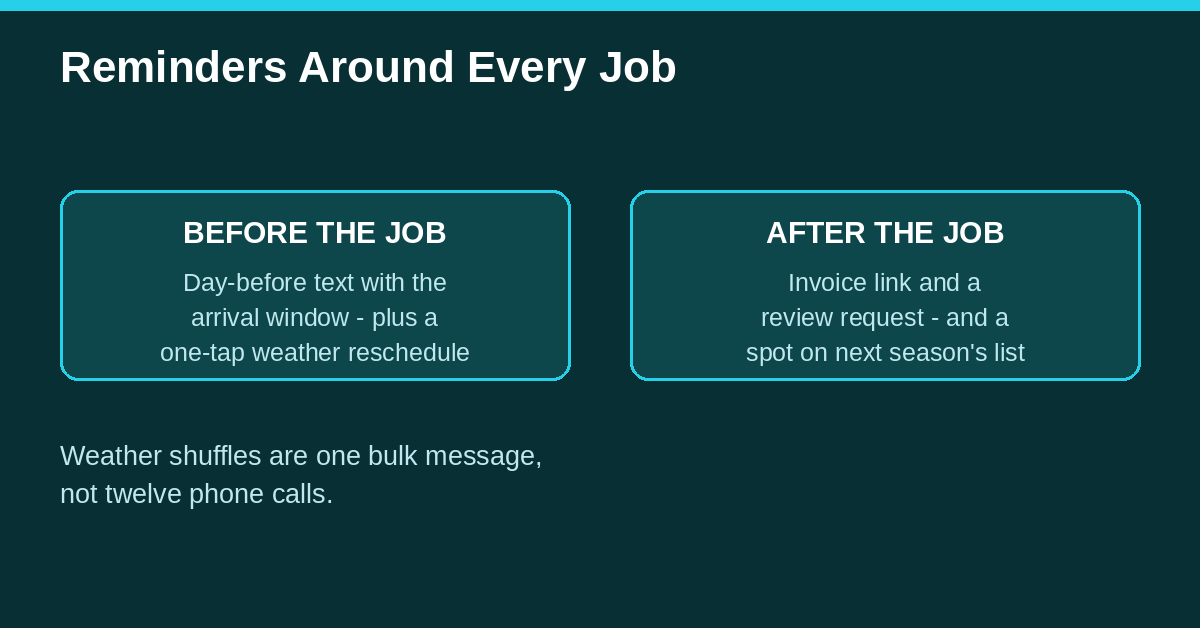
Seasonal work means seasonal no-shows and weather reschedules. Both shrink dramatically when communication is automatic:
Booking confirmation the moment they schedule.
A reminder text the day before, with the arrival window and anything they need to do (unlock the gate, move the car).
A weather-reschedule message you can trigger for a whole day's route at once when rain or snow forces a shuffle — one action instead of twelve phone calls.
A post-job message with the invoice link, a review request, and a note that they're now on the list for next season's early booking.
That last step quietly builds next year's pre-season list, which is where the whole cycle starts again.
Step 5: Sell the Twice-a-Year Plan
The strongest version of this system removes the booking problem entirely: a recurring maintenance plan. Homeowners sign up once for spring and fall cleaning, and each season the system creates the job, sends the reminders, and charges the card on file.
The funnel for this is a small variation on the booking funnel — a page explaining the plan, the two visits, and the per-visit price, with a checkout that starts the subscription. In GoHighLevel, the plan members live in their own segment, so when the season opens you schedule them first and fill the remaining capacity with one-time bookings. Predictable recurring revenue, a schedule that starts each season partly full, and customers who never get poached because they never shop around.
Putting It Together
None of this requires a big website rebuild or a marketing department. It's one funnel per season, one automation set for new leads, one for reminders, and one campaign a year — twice — to the customers you already have. The companies that look "lucky" every spring are usually just the ones whose systems start working before the snow melts.
If you'd like this built for your company, the funnel and automation services at Funnels by Zayyan cover exactly this kind of seasonal booking system, and you can book a free strategy call to map out your next season before it arrives.
FAQ
When should I open bookings for spring gutter cleaning in Canada?
Open your past-customer booking window about four to six weeks before the typical snowmelt in your area, and public booking two to three weeks after that. The exact dates vary by province, but the principle holds everywhere: past customers first, early enough that you can spread the work out.
Can GoHighLevel handle weather reschedules for a whole day's route?
Yes. Jobs booked through GoHighLevel calendars can be tagged by date and route, so a single workflow can text every affected customer a reschedule message with a link to pick a new time — instead of your office calling each household individually.
Do I need a new website to run a seasonal booking funnel?
No. A GoHighLevel funnel is a standalone page you can link from your existing website, your Google Business Profile, and your ads. Most companies start with the funnel and leave their main website untouched.
How does the twice-a-year maintenance plan work with payments?
The customer checks out once and the card stays on file. Each season, the system schedules the visit and charges per the plan terms. Failed payments trigger an automatic retry-and-remind sequence, so you're not chasing invoices by phone.
Is this only for large companies?
No — it matters most for small crews. A two-truck company can't afford a full-time office person to answer every call during the rush. Automation gives a small operation the response speed of a much bigger one.


